
By therandomsci / July 24, 2020
Lice are parasitic insects that can be found on people’s heads and bodies, including the pubic area. Human lice survive by feeding on human blood. Lice found on each area of the body are different from each other. Lice are parasitic insects that can be found on people’s heads and bodies, including the pubic area. Human lice survive by feeding on human blood. Lice found on each area of the body are different from each other.
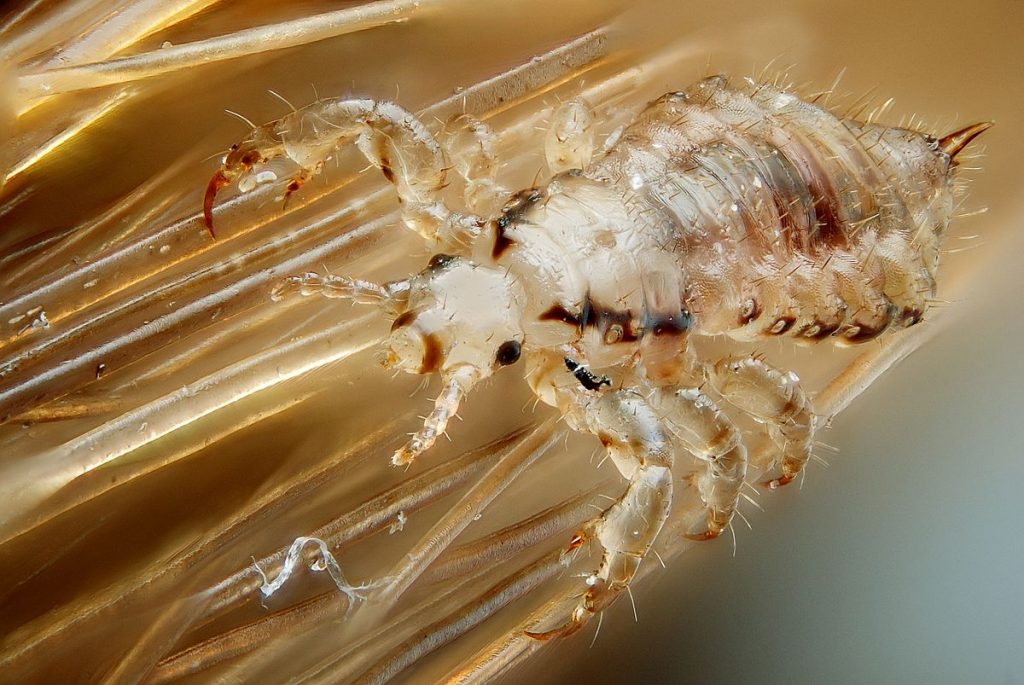
Only Pediculus humanus corporis (body louse, clothes louse) can spread disease.
Lice can only spread by direct contact with humans. Dogs, cats, and other pets do not transmit human lice. Lice move by crawling; they cannot hop or fly.
Pediculus humanus capitis (head louse)
Head lice infest the head and neck and attach their eggs to the base of the hair shaft. Lice move by crawling; they cannot hop or fly.
Pediculus humanus corporis (body louse, clothes louse)
Body lice live and lay eggs on clothing and only move to the skin to feed. Can also transmit disease. generally limited to persons who live under conditions of crowding and poor hygiene (for example, the homeless, refugees, etc.).
Pthirus pubis (“crab” louse, pubic louse).
Pubic lice typically are found attached to hair in the pubic area but sometimes are found on coarse hair elsewhere on the body (for example, eyebrows, eyelashes, beard, mustache, chest, armpits, etc.). Pubic lice infestations (pthiriasis) are usually spread through sexual contact.
Leave A Comment